


Page 54 - Phonebox Magazine December 2009
P. 54
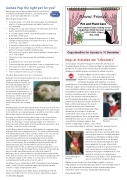
Guinea Pigs the right pet for you?
Guinea pigs are friendly and easily tamed, but they need commitment and regular attention. Long-haired guinea pigs can be especially difficult to look after.
What do guinea pigs need?:
• Companionship - to be with other guinea pigs. The widespread practice of keeping guinea pigs and rabbits together is not recommended.
• Feeding twice a day, with a mixture of meadow hay, green stuff, pellets, washed fruit and vegetables.
• A constant supply of fresh, clean drinking water in a drip feed bottle with a metal spout.
• A large weatherproof home kept off the ground, out of direct sunlight and strong winds. It should be moved to an indoor area or porch in cold weather.
• A separate sleeping area for each animal inside the home.
• A clean layer of wood chippings on the floor of their home and
plenty of soft hay for bedding and burrowing.
• Daily exercise in a grassy area safe from predators and an indoor
run in cold weather.
• Their home to be cleaned every day and bedding changed
weekly.
• A gnawing block to wear down long teeth.
• To be brushed every day if they have a long or rough-haired coat.
• Some quiet time alone or with other guinea pigs every day.
• To be taken to a vet if they are ill or injured.
• To be looked after when you are on holiday.
Life span: Guinea pigs live for up to seven years.
Behaviour: In the wild, guinea pigs live in close family groups, and it is unkind to keep one guinea pig.
Companionship is essential, but
two adult guinea pigs that don't
know each other may fight, so choose two young littermates of the same sex, a father and son, or mother and daughter. Guinea pigs have a basic need to graze and should have regular access to a grassy area. Guinea pigs also need to have their own sleeping area.
Handling: Approach the guinea pig from the front and on its level. Pick it up using both hands, one around the hindquarters, the other around its shoulders (for a young guinea pig) or around its chest (for an adult). Guinea pigs may become upset by too much handling.
Breeding: The RSPCA strongly advises that you do not breed from your guinea pigs as it is very difficult to find good homes for the young. The best way to ensure that guinea pigs do not breed is to keep males and females apart. A female guinea pig can produce up to five litters a year from a very young age.
Health: Guinea pigs should be checked regularly for overgrown claws and teeth. Both can be trimmed by a vet. Too much scratching results from skin problems and is often caused by mites or lice. Your vet can provide suitable treatment for these. Long-haired guinea pigs in particular may suffer from the potentially fatal disease flystrike, caused by flies laying eggs in soiled fur. Make sure the guinea pigs' home is cleaned every day and bedding changed regularly. Groom guinea pigs every day, checking their fur all over for any dirt, especially under the tail. If a guinea pig develops bald patches on its face, this could indicate the fungal disease ringworm. Seek veterinary advice straight away. Guinea pigs can suffer from vitamin C deficiency, which causes weight loss, general weakness and swollen joints. Ask your vet for advice on how to provide your guinea pigs with an adequate supply of this vitamin. If you have any concerns about your guinea pigs' health, ask your vet for advice.
The Milton Keynes & North Bucks RSPCA would like thank Phonebox and it’s readers for their continued support during 2009 and wish everyone a happy and prosperous 2010.
For more information on the Milton Keynes & North Bucks RSPCA please call 01908 611179 or visit our website www.mkrspca.org.uk
Copy deadline for January is 15 December
Dogs at Astonlee are “Lifesavers”
On Tuesday 6 October, 18 dogs from Astonlee arrived at our Hospital between the hours of 2pm and 8pm for appointments to give blood. The dogs were selected from the hospital’s patient database of eligible animals and invited to attend a session.
Pet Blood Bank is the first service of its kind to collect, process, store and supply pet blood products. Donor sessions are run at voluntary Veterinary Hospitals and Surgeries on a three-
monthly basis. Donors arrive to book in for a health check with a veterinary surgeon which includes blood tests, physical examination and consultation with the owner. Once the vet is happy they are fit and healthy enough the donor dogs go into
54 Phonebox Magazine
another consulting room to donate the
blood. The donation will take between 5
and 10 minutes depending on the dog. The
staff from both Astonlee and the Pet Blood
Bank comfort and reassure the donors
throughout the process. Owners are
allowed to stay with the dogs whilst they
donate but do not have to if they are
worried they cannot face the blood and
medical atmosphere. Once the dogs have
donated they have a post donation check
over with the veterinary surgeon then
receive a doggie bag of treats, a toy of their
choice and a bandana to say they “saved a life and gave blood”.
Lenny following his donation
All donors appeared to enjoy the experience (even the ones that didn’t give blood as they were too excited!) and were well behaved. We will be holding another session in January 2010 at our Hospital, these donors will be invited back to give blood again but if you are interested in volunteering your dog to get involved in the next session please contact Astonlee Veterinary Hospital on 01908 611637. Your dog does not have to be registered at Astonlee for your dog to come along but all donors must fit the following criteria.
Eligible donors need to be: Over 25kg in weight, of a good temperament, not travelled abroad, between one and eight years of age, up to date with vaccinations and be fit and healthy. More information can be found at: www.petbloodbankuk.org
Claire Burdett RVN
Casper following his donation


