


Page 50 - Phonebox Magazine December 2009
P. 50
A Winter Night
Steve Clark looks back at an event long ago...
As the daylight began to fade on a cold winter’s day in January 1973, unusual sounds were heard emanating from the upper hall of Church House in Market Hill, Newport Pagnell. Later that evening, a small but select audience were treated to a performance of one of the most original and influential groups touring the UK at that time. That group was called Fusion Orchestra and the performance at this somewhat unlikely venue was the culmination of my aspiration to promote them in this area. The music they played was a melting-pot of jazz, blues, heavy rock and acoustic folk and with the five individual members playing a wide array of different instruments, the name Fusion Orchestra was quite fitting!
minutes long, formed the basis of the live set played by the group in Newport Pagnell. The live sets performed by Fusion Orchestra tended to be about 90 minutes long and usually featured the individual members of the group playing solo items. Jill’s solo item was usually “Queen of Sheba”, a beautiful but powerful song with Jill accompanying herself on 12-string guitar. Colin’s guitar solo, much more frenetic and heavy was based upon the Gershwin classic “Summertime”. Dave Cowell and Stan Land would normally do a harmonica duet, a popular item with the audience. However, it was always Dave Bell’s drum solo which drew the greatest attention. During the solo, Dave would leave the stage and work his way through the audience playing anything that came to hand – glasses, crash helmets, PA cabinets and the like. It was not unknown for Dave to leave the building, and I seem to
recall him playing the metal railings of the fire escape of Church House as he returned from one such foray.
I first saw Fusion Orchestra when they were supporting Genesis at Shoreditch Town Hall on 29th June 1972. I was thoroughly impressed with their performance and really keen to see the group perform again. The next opportunity to do so came at Fantasia, a club in Northampton, on 10th August 1972 and then at Northampton Cricket Club on 9th September the same year. Having
established contact with Steve Parker, Fusion Orchestra’s enthusiastic manager, I was soon making regular visits to the legendary Marquee in Wardour Street, London, almost a second home to the group. We had a regular posse from the Olney area who would take advantage of the reduced price “Night Rider” tickets to travel down to London by train from Bletchley or Wolverton.
There were to be a number of changes to the group’s line-up during the years they were together. During that time the group played a total of 475 gigs – I managed to get to see them perform around 40 times. The first major change to the ‘classic’ line-up came with the departure of Dave Cowell in December 1973. Dave was replaced by bassist Paul Jennings. The group then briefly performed as a six- piece from February 1974 with the addition of Martin Slavinec on keyboards. One of the founder-members, Stan Land, left in mid-1974 and was replaced by former roadie Andy Blamire. The remaining founder-member, Colin Dawson, left on 22nd December 1974. Andy Blamire also decided that enough was enough around this time. The final line-up of Fusion Orchestra saw the arrival of Alan Murphy, formerly a guitarist with Long John Baldry. With the arrival of Alan Murphy the group was re-branded as Jill Saward’s Fusion Orchestra. Alan’s style was radically different from Colin’s, giving the group a much different sound. The final line–up played just 25 gigs, of which five were at the Marquee. A particularly memorable evening for me was at Barbarella’s in Birmingham on 4th May 1975. The set was one of the finest and most enjoyable I had
heard from the group. Just a couple of days later I received a letter from Steve Parker, the group’s manager: -
“I am sorry to have to let you know that Jill Saward’s Fusion Orchestra have finally split up this week – the band will not reform in any way. The reason is basically rising costs – we just could not afford to go on without a recording deal. These things aggravated various other things like musical differences. Jill will obviously go solo and may even get a band together. Alan is returning to Baldry and Paul and Dave have no plans as yet. It is fortunate that you were at Barbarella’s for the last gig.”
Fusion Orchestra’s “Skeleton in Armour” album became a much sought-after item after the demise of the group. The album sleeve featured a series of intricate woodcut prints by Hans Holbein the Younger (1497 – 1543) called “The Dance of Death”, which seemed to compliment the album somewhat and was a masterpiece of design. A CD version of the album was reissued by EMI Japan in February 2009. The album is now available as a download from Amazon at a very modest price.
A number of the former members of Fusion Orchestra are still involved in the music business. Jill Saward was a member of an all- girl group called Brandy for a short time before joining Shakatak in 1981. Jill is still performing and writing with Shakatak to this day. Colin Dawson played regularly with various groups over the past 2 decades and has now formed Fusion Orchestra 2. Colin is joined in the new group by Ben Bell on keyboards, Alon Cohen on drums, Nick Daniel on bass and Jo Hollands on vocals. The new group has been rehearsing some of the old material from “Skeleton in Armour” along with some new material in a similar vein. For more information on the new group, have a look at their “My Space” page.
Looking back to the Newport Pagnell shows all those years ago, I regret not having managed to capture any photos of these historic events. However there is a souvenir in the form of a ‘live’ recording, believed to have been from the January event. The recording was made by Olney resident Chris Digby using an old reel-to-reel machine. I managed to persuade Chris to dig out the tape a few weeks ago and he has kindly digitised the recording. Colin was delighted to hear the result, and advised me that he had never heard a ‘live’ recording of the original group before. Hopefully it will not be too long before the new line-up starts to do some live shows!
Links:
Email: stephen.clark89@yahoo.co.uk Website: http://tinyurl.com/km9hdd
Steve on Facebook: http://facebook.com/tiliacus
Fusion Orchestra: http://fusionorchestra.com Fusion Orchestra2: http://fusionorchestra2.com
My Space: http://myspace.com/fusionorchestra2
IN MEMORY OF ALAN MURPHY, 28.11.1953 – 19.10.1989 http://alan-murphy.co.uk
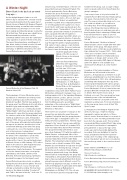
Fusion Orchestra at the Marquee Club, 90 Wardour Street, W1
The beginnings of Fusion Orchestra can be traced back to 1969 when two friends, Colin Dawson and Stan Land, were joined by drummer Dave Bell. The first bass guitarist in the group was Dave Wheeler, but he left after a handful of gigs and was replaced by Mick Sluman, who was soon co-writing tracks like “Winter Nights” with Stan and Colin. A major turning-point came after the group advertised for a male vocalist in the “Melody Maker” and ended up auditioning vocalist Jill Saward in October 1970. Jill was an instant hit with the rest of the group, although she had lied about her age as she was two months short of her seventeenth birthday at the time! The group continued to be one of the hardest-working acts in the business, touring almost incessantly. Another major change came with the arrival of the charismatic Dave Cowell, replacing Mick Sluman in June 1972. This produced the ‘classic’ line-up that performed at Church House on 20th January 1973, with a return to the venue on 25th August that year. Both of the Newport Pagnell gigs were organised as charity fund-raisers. The support act for the January event was a local group called Nancy who hailed, I believe, from Bletchley. A Bozeat-based group, Germaine, provided the support for the August event.
Fusion Orchestra produced only one album during the years they were together. This was “Skeleton in Armour”, now a very rare and critically acclaimed recording. The four main tracks on the album including “Sonata in Z” and “Talk to the man in the sky”, both over 12
50 Phonebox Magazine


